professionals from Process Intelligence's world
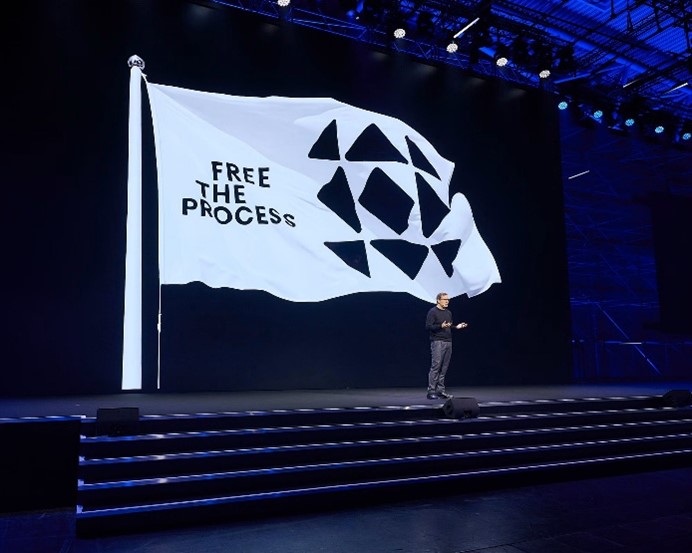
The ICPM Industry Days 2026, which took place this year in Karlsruhe, Germany, brought together more than 150 professionals from the Process Intelligence sector. The event was an opportunity to share innovations, with engaging conferences on the new functionalities of the tools and concrete feedback, including an interesting presentation by Vil van der Aalst. The editors present (MPmx, Celonis, SAP Signavio, SAP Signavio, Apromore by Salesforce) highlighted their advances in the field of artificial intelligence, with for example the integration of functionalities such as Copilot, a chatbot allowing you to chat with an AI and answer questions about the analyzed process. Most publishers presented their AI algorithms for creating intelligent agents and automating processes. ICPM Industry Days confirmed that the majority of Process Mining software companies take the opportunities offered by AI seriously, while seeking to offer solutions that bring value as quickly as possible, in order to increase the ROI linked to the use of each platform.
The feedback sessions we attended were particularly insightful, especially BMW's case. The company explained that it had changed its strategy to better centralize its activities, in particular by changing their methods of contracting with clients and dearlership, their pricing, and how they handle customer data. BMW started using Process Mining in 2017 through the creation of a Center of Excellence (CoE), with initially 5 use cases and 30 users. In 2021, they deployed analyses in near real time and automated actions via workflows, with more than 50 use cases and nearly 1000 users. Since 2024/2025, BMW has implemented end-to-end process supervision, using features such as Object Centric Process Mining (OCPM) and Process Co-Pilot. The OCPM vision was critical for BMW, allowing them to visualize, improve, and monitor the entire process, including breaking down vehicle ordering, production planning, manufacturing, distribution, and delivery, with around 24 months of historical data. The OCPM approach facilitates the sharing of business knowledge and the dissemination of processes across the organization. Their current goal is to focus on predicting bottlenecks so they can anticipate and resolve them before they happen, as well as to implement AI-based decision-making. BMW considers Process Intelligence to be a key step in implementing AI solutions: “There is no AI without IP.” They now want to be able to communicate with their data via AI, automate tasks, predict processes, simulate and orchestrate their operations. They highlighted several important points for their successful transformation: having a central data lake and data products to accelerate the implementation of use cases, aligning Process Mining objects and events in OCPM with the business language, quickly validating process variants and KPIs in order to ensure the reliability of any analysis, working in collaboration with key users from the very first phases. Finally, BMW insists on the fact that Process Intelligence is above all about people: “No blaming, only joined process improvements.” Team collaboration and commitment are essential for this transformation to succeed.
In summary, the ICPM Industry Days 2026 confirmed the growing importance of Process Intelligence in the digital transformation of businesses. Technological advances, especially in the field of artificial intelligence, offer unprecedented opportunities to optimize processes, anticipate bottlenecks and strengthen decision-making. However, beyond tools and algorithms, the success of this transformation depends above all on the commitment of teams and a collaborative approach. BMW is a concrete example, illustrating that the true value of Process Intelligence lies in the synergy between technology, processes and people.