
Celonis improves continuously through a steady stream of releases, published every two weeks. Keeping up is an exercise in itself: a good share of the announcements are usability improvements, and what really matters is rarely obvious from the headline.
Over the period from mid-March to mid-August2026, three themes clearly stand out. They do not target the same users - the first speaks to programme sponsors, the second to the teams industrialising AI,the third to OCPM developers and analysts - but they all point in the same direction: Celonis is moving from making capabilities available to industrialising them.
We have selected the new features that, in ourview, offer the most immediate value to OCPM developers and business users.
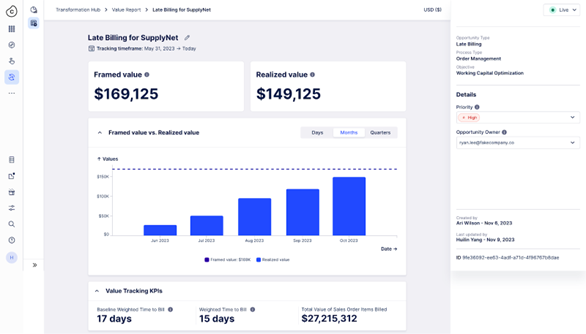
Benefits tracking still too often relies on afile maintained by hand by the PMO, challenged the moment the scope changes. Celonis now addresses this as a product with the Transformation Hub: a Views app that centralises value tracking per initiative, distinguishing action-based gains, rate-based gains and non-monetary benefits.
The decisive complement is quieter. KPISnapshots freeze a KPI's value at scheduled intervals as immutable records: proving an improvement no longer means re-running a query against a data scope that has itself moved in the meantime. Note that snapshots cannot be backfilled- they must be instrumented when the first use case goes live.
Key takeaways:
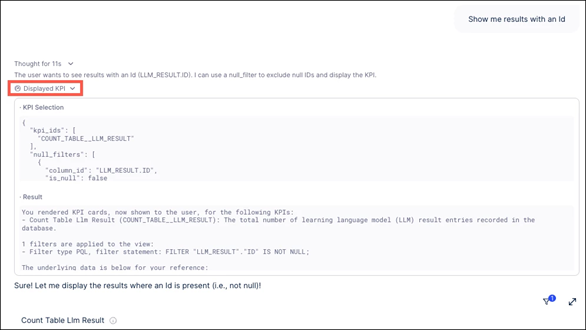
Agent projects launched last year generally ran into three walls: free-text output that could not be plugged into a downstream system, no visibility into the reasoning when an answer was wrong, and credit consumption that could not be controlled.
All three are now addressed. A Process Copilot returns JSON matching a defined schema, becomes a step in an orchestrated workflow able to call external APIs, and can conversely trigger running orchestrations. Live reasoning traces expose the tool calls behind each answer- a condition for any business sign-off. Add to this production guardrails: per-asset consumption limits, tool testing before delivery, modular skills.
Key takeaways:
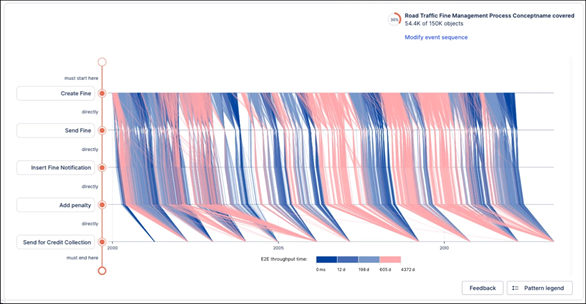
The object-centric model has long been richer than the analysis tools built on top of it. Metrics now separate waiting time, synchronisation time between objects and execution time: enough to attribute a bottleneck to an object waiting for another rather than to an activity that is running perfectly well - often the real problem on order-to-cash or purchase-to-pay processes with strong dependencies.
Two components complete the picture. The Performance Spectrum adds a time-based reading where the process map remains a snapshot; the Instance Explorer makes the individual case accessible in graphor list view, without writing PQL, removing a recurring adoption barrier on thebusiness side.
Key takeaways:
These three themes tell the same story: Celonis is looking less to widen the platform's functional scope than to make production-ready what already existed in a demo. For the teams running it, the question becomes less which features to switch on than whether the foundations are ready for them.
Other releases from the period are worth a look: the Process Adherence Management advances around the Adherence Explorer,the PQL WITH clause, composite primary keys, calendar-based throughput timesand Bring Your Own Key. Less spectacular, but they make a real difference to the daily work of development teams.